
Featured Case Study
Digital Twins for Substations
-
Partner

- Sector Power Distribution & Utilities
Substations
ROI & Business Impact
Improvement in overall asset utilization
15-25%
Reduction in total energy consumption
20-30%
Reduction in substation maintenance costs
20-40%
Reduction in unplanned downtime
5-10%
Investment & Costs
- Pilot$50,000 – $75,000
- Full SubstationTBD
- Multi-SubstationTBD
- Utility-wideTBD
Investment Recovery
- Typical payback period: 12-18 months
- Ongoing operational savings compound annually
- 5-year NPV: 200-400% of initial investment
Challenges
Utilities & Substations
Grid Stability & Load Balancing
Complex power flow management across multiple feeders and voltage levels
Asset Downtime & Equipment Failure
Aging infrastructure causing unexpected outages and service disruptions
Reactive Maintenance
Limited predictive capabilities resulting in costly emergency repairs
Operational Costs & Safety Risks
High manpower needs for hazardous on-field monitoring and inspections
- Each substation loses 25 hours every year in downtime or outages
- Each hour of unplanned or unscheduled downtime can cost up to $187,500
- Manual monitoring requires 40% more field operators than necessary
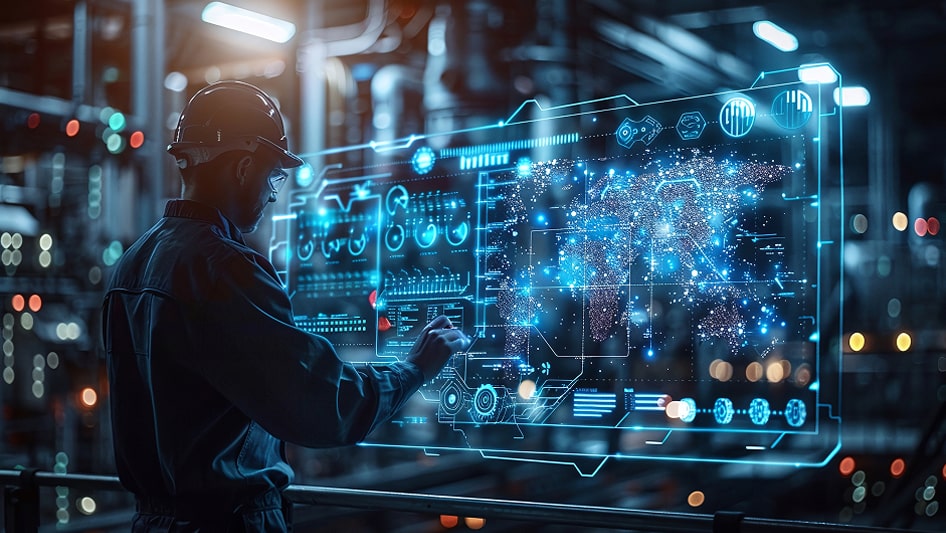
Maintenance costs can be reduced with IoT and digital twins
Why Digital Twins
Substations
Operations
Integrate data from multiple sources - SCADA, IoT sensors, protection systems, and power flows - into a single, interactive 3D platform.
Decisions
Real-time simulations allow teams to test scenarios, predict failures, and respond proactively to grid stability challenges.
Costs
Reduce reliance on reactive maintenance and enable predictive strategies that extend equipment life and cut operational costs.
Scalability
User-friendly interfaces reduce training time and scale seamlessly with evolving grid needs and renewable integrations.
Solution
Overview
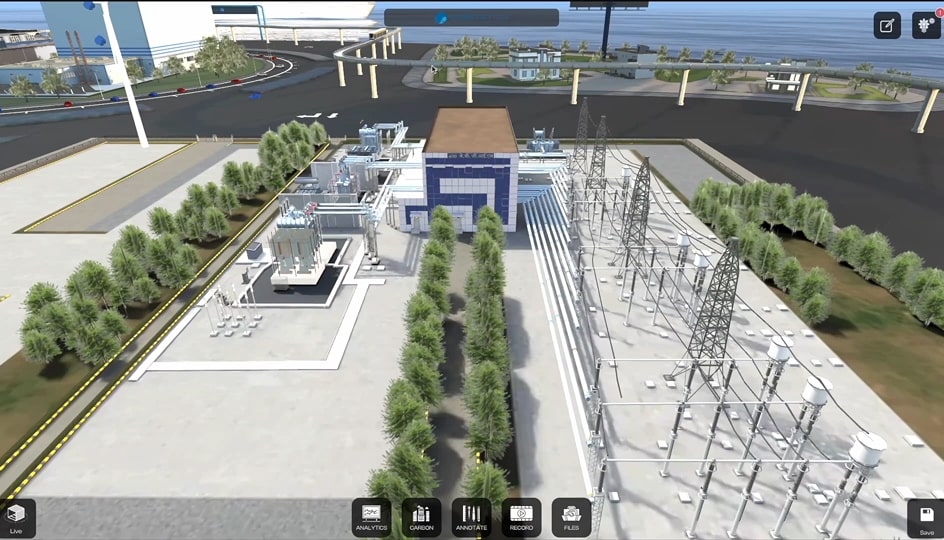
With a combination of 3D, IoT, and AI – we will create a digital twin of your substation
Solution
For Substations
Combining 3D, IoT, and AI on a patented no-code web application for creating digital twins that serve as cognitive assistants
- SCADAs/IEDs
- AI/LLM Data
- Protection Relays
- Video Feed
- Historical Data
- IoT/RTU/PMU
- Assets/ERP
- SCADAs/IEDs
- AI/LLM Data
- Protection Relays
- Video Feed
- Historical Data
- IoT/RTU/PMU
- Assets/ERP
Immersive 3D Command Control
Monitor entire grid operations in an interactive 3D environment, updated with AI-driven real-time data for proactive decision-making.
AI-Driven Predictive Maintenance
Identify and prevent issues before they arise with AI that continuously learns and predicts potential risks for transformers, breakers, and critical infrastructure.
Dynamic Performance Optimization
Leverage advanced analytics and dashboards to reduce downtime, optimize resource allocation, and achieve peak operational performance.
Scenario Simulation
Harness AI-powered digital twins to simulate emergency scenarios, grid stability tests, and outage management with unmatched accuracy.
Sustainability Intelligence
Optimize energy consumption, reduce waste, and meet ESG goals with AI-enhanced sustainability insights and automated compliance reporting.
High Performance Without Infrastructure
Web-based platform delivers seamless performance without GPU servers, saving costs while maintaining scalability across all devices.
Our USP
Mass Accessible Digital Twins
| Traditional Solutions | Our Breakthrough | |
|---|---|---|
|
Accessibility barrier
|
Siloed Solutions
|
Browser Application
|
|
Creation complexity
|
Requires 3D Designers/ Developers
|
No-code platform
|
|
Hardware requirements
|
GPU Servers ($250k-$750k)
|
No GPUs or heavy servers needed
|
|
Deployment time
|
6 to 9 Months
|
6 to 9 Weeks
|
|
Device limitations
|
PC/Desktop or specific hardware
|
Access on any device
|
|
Technical dependencies
|
Constant IT support required
|
Self-service platform
|
|
Annual pricing per twin
|
$100k-$1M
|
$25k-$80k
|
Features (1/4)
Benefits of Digital Twins for Substations
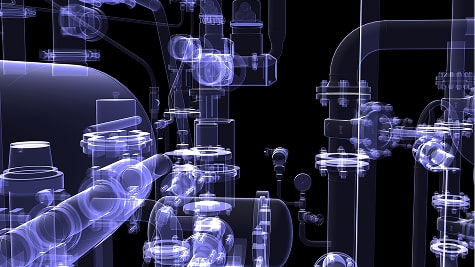
Asset Health Monitoring
- Asset uptime
- Failure rates
- Maintenance costs
- MTBF
-
Description
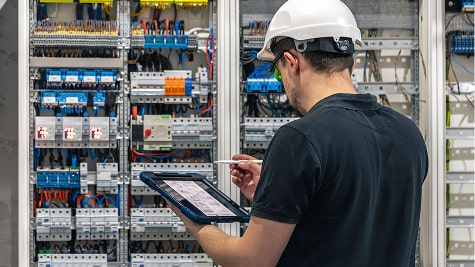
Real-time monitoring of critical electrical assets, such as transformers, circuit breakers, switchgear, and protection systems, using IoT sensors and SCADA systems.
-
Business Impact
Improved asset reliability, reduced downtime, and optimized maintenance planning
-
Key Elements
IoT sensor data, SCADA system feeds, historical performance data.
Predictive Maintenance of Equipment
- Predicted vs Actual Failures
- MTTR
- Maintenance Cost Savings
-
Description
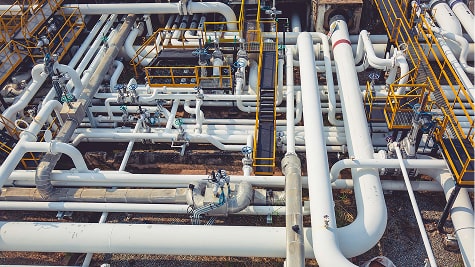
Develop AI-driven predictive models to anticipate transformer, breaker, and switchgear failures, enabling proactive maintenance
-
Business Impact
Reduction in unplanned downtime and maintenance costs while increasing asset life.
-
Key Elements
Historical failure logs, maintenance records, operational data from Maximo and IoT systems.
Energy Consumption Optimization
- Energy consumption (kWh)
- Reduction in CO2
- Cost Savings
- Sustainability Goals
-
Description
Real-time monitoring and optimization of energy usage for auxiliary systems and losses like cooling systems, lighting, and station service.
-
Business Impact
Reduced energy costs, improved sustainability metrics, and regulatory compliance
-
Key Elements
Energy usage data from IoT systems, operational logs of major energy-consuming equipment.
Features (2/4)
Benefits of Digital Twins for Substations
Power Flow Optimization
- Avg Power
- Hourly Throughput
- Voltage Quality Stability
-
Description
Monitor and simulate power flow in feeders to identify bottlenecks and optimize load distribution and resource allocation
-
Business Impact
Increased grid throughput and reduced line losses, improving system experience.
-
Key Elements
Load flow data, feeder configurations, substation layout.
Equipment Monitoring and Tracking
- Equipment uptime
- Immersive RCA
- Unplanned downtime
-
Description
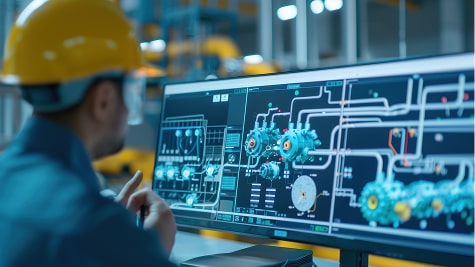
Real-time tracking and monitoring of switchgear operations integrated with IoT sensors for performance analytics.
-
Business Impact
Improved equipment handling efficiency, reduced incidents of equipment failure, and enhanced system reliability.
-
Key Elements
Equipment operation logs, switching data from sensors, incident reports.
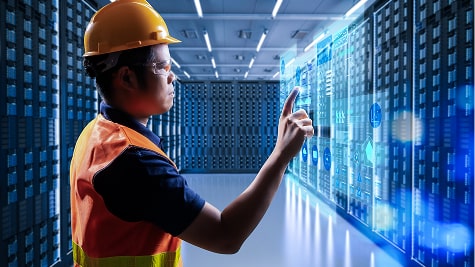
Resource Allocation Optimization
- Operator utilization rate
- Cost savings per resource
- Service quality scores
-
Description
Use AI to dynamically allocate operator and equipment based on real-time and predictive outage patterns.
-
Business Impact
Improved operational efficiency and reduced resource costs.
-
Key Elements
Engineer schedules, historical outage data, real-time incident rates.
Features (3/4)
Benefits of Digital Twins for Substations
Grid Stability and Load Management
- Grid Stability
- Outage incidents
- Load Factor
-
Description
Monitor and simulate grid stability conditions to optimize voltage regulation and reactive power management.
-
Business Impact
Reduced voltage violations and enhanced reliability for critical infrastructure
-
Key Elements
PMU data, voltage profiles, power factor measurements, operational schedules.
Real-Time Dashboard for Stakeholders
- Response times
- Incident MTTR
- User satisfaction
- NPS and other stats
-
Description
Provide a unified dashboard integrating data from SCADA, EMS, and other systems for realtime decision-making.
-
Business Impact
Improved operational transparency and faster response times to issues.
-
Key Elements
Data feeds from existing systems, KPIs for operational performance.
Emergency Scenario Simulation
- Restoration Time
- Scenario accuracy
- Compliance Levels
-
Description
Use simulations to plan evacuation and disaster response scenarios.
-
Business Impact
Enhanced system resilience and compliance with regulatory standards.
-
Key Elements
Passenger flow data, building layouts, emergency response protocols.
Features (4/4)
Benefits of Digital Twins for Substations
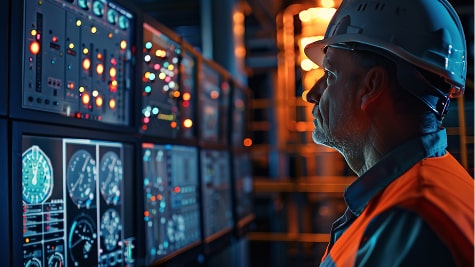
Automated Incident Response
- Incident response
- Number of incidents
- Resolution success rate
-
Description
AI-powered detection of operational incidents (e.g., faults, equipment failures) and automated alerts for resolution
-
Business Impact
Reduced downtime and improved safety for utility workers and public.
-
Key Elements
Camera feeds, IoT sensor data, historical incident reports.
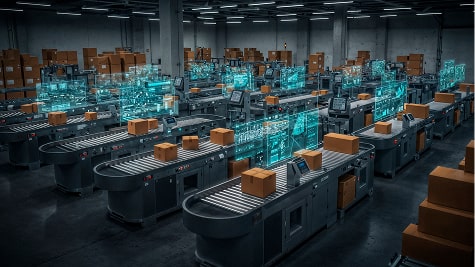
Inventory and Spare Part Management
- Stock-out incidents
- Turnover rate
- Availability rate
-
Description
Real-time tracking and optimization of inventory levels to ensure availability of critical spare parts.
-
Business Impact
Minimized downtime due to inventory shortages and optimized storage costs.
-
Key Elements
Spare parts usage, order lead times, inventory levels.
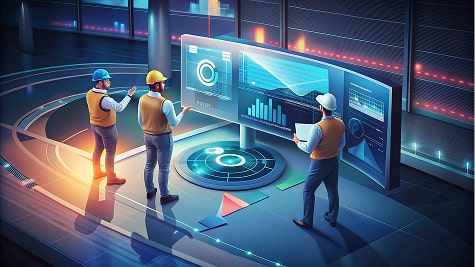
Facility Usage Analytics
- Space utilization rate
- Equipment accessibility
- Peak usage periods
-
Description
Analyze substation and facility usage patterns to optimize layouts and plan expansions effectively
-
Business Impact
Improved space utilization and enhanced operational efficiency.
-
Key Elements
Equipment placement data, maintenance access patterns, facility layouts.
Business Model
Substation Digital Twin
| Feature | Basic | Pro | Enterprise |
|---|---|---|---|
|
Complexity
|
Asset level
|
System Level
|
Process Level
|
|
Level of Detail
|
LOD2
|
LOD3
|
LOD4
|
|
Workflows
|
4
|
10
|
no limit
|
|
Viewer Access
|
1 User
|
2 Users
|
4 Users
|
|
Editor Access
|
-
|
1 User
|
2 Users
|
|
Heatmap view
|
Yes
|
Yes
|
Yes
|
|
Real time IOT integration
|
Yes
|
Yes
|
Yes
|
|
Basic simulation
|
-
|
Yes
|
Yes
|
|
Assistive Maintenance
|
-
|
Yes
|
Yes
|
|
X-Ray View
|
-
|
-
|
Yes
|
|
AI/LLM Integration
|
-
|
-
|
Yes
|
|
Custom Branding
|
-
|
-
|
Yes
|
|
VAS Integration
|
-
|
-
|
Yes
|
|
Predictive Maintenance
|
-
|
-
|
Yes
|
|
Forecasting
|
-
|
-
|
Yes
|
|
Discount on new License
|
-
|
5%
|
10%
|
|
Price per month
|
Implementation Approach
Pilot / POC
Discovery, Design, Integration (Weeks 1-3)
- Current state assessment, use case prioritization and ROI analysis
- Feasibility report and digital twin implementation plan
- Digital twin architecture design
- Data pipeline establishment and system integration
- Initial 3D model creation and validation
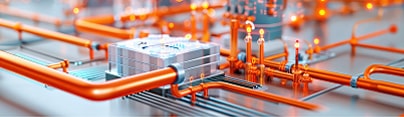
Development, Deployment (Weeks 3-6)
- Phased rollout starting with priority use cases
- User training and change management
- Performance monitoring and optimization
- 3D digital twin application publishing for multiple platforms
- Role-based access and control for digital twin usage
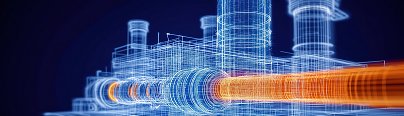
Training, Handover, Roadmap (Weeks 7-9)
- Knowledge transfer and documentation
- Additional use case implementation
- Advanced analytics and AI model deployment
- Continuous improvement and feature enhancement
- Expansion to additional terminals/facilities
Media Mentions
Substations
Tracxn
Top 10 Digital Twin Startups in India

Forbes
Forbes Asia 30 Under 30

Shark Tank
Featured in S02E28 – “Game Changers”

USPTO
US Patent Granted till 2035
GATES
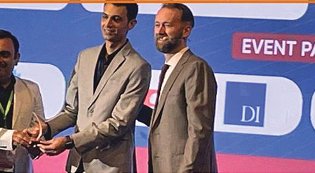
Best Innovation Award (2024)
TechCrunch
Featured in TC NoCode/IoT Startups
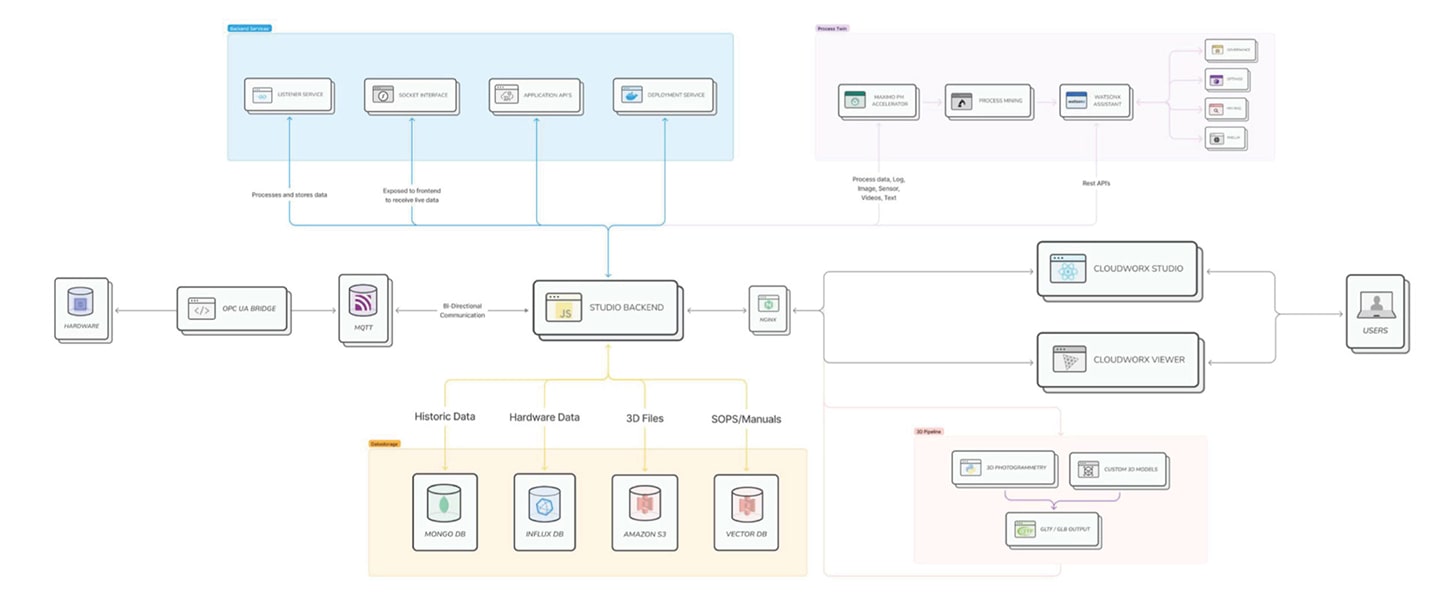
Technology Architecture
Digital Twin Platform

Explore How a Digital Twin Can Boost Your Operations